Chimney Flashing Repair in Jersey City, NJ
Flashing is the metal that seals the joint between a chimney and the roof. It is the most common source of a leak beside a chimney. We carry out chimney flashing repair in Jersey City on both flat and pitched roofs.
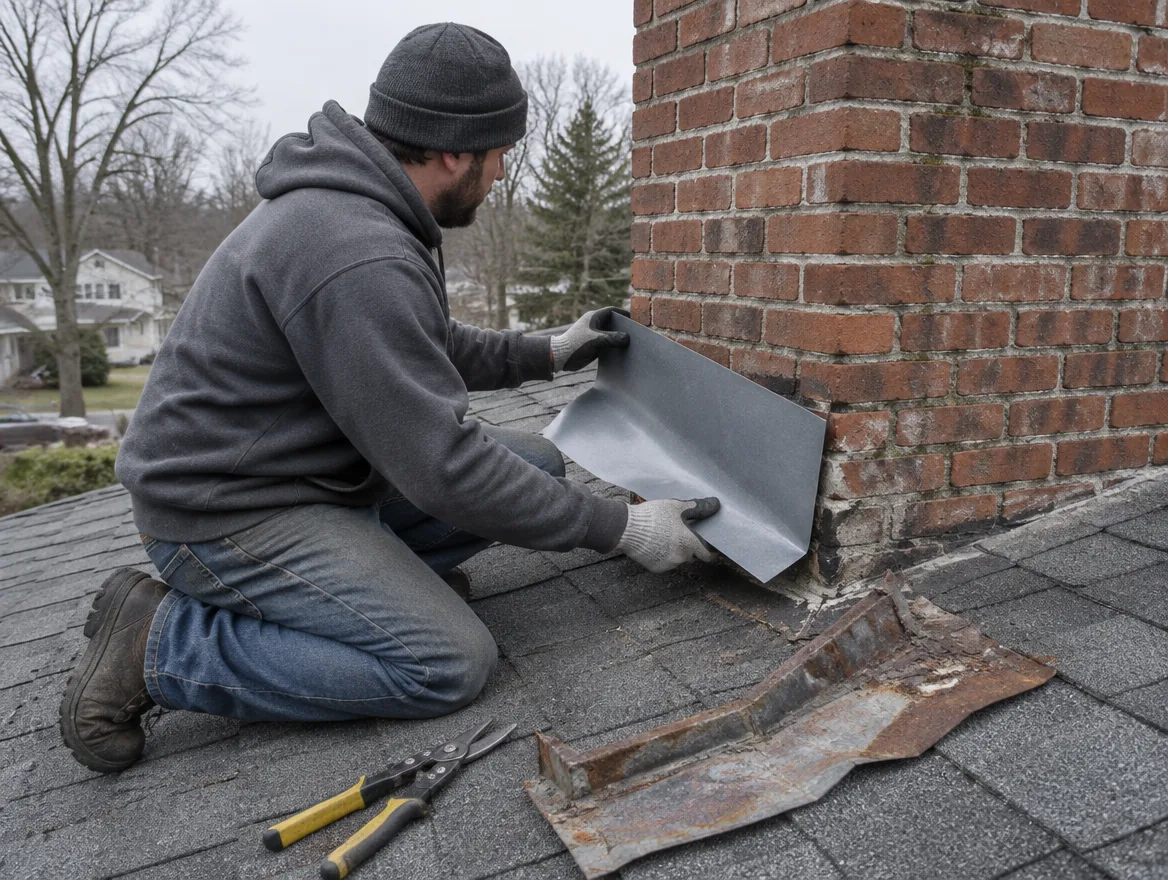
Water entering the building at the joint where the chimney passes through the roof.
A ceiling or wall stain near the chimney, rust streaks, lifted metal, dried-out tar.
Sound metal with a failed seal is resealed. Rusted or loose flashing is replaced.
How chimney flashing works
A chimney and a roof move differently. The roof flexes with heat, wind and the weight of snow. The chimney barely moves at all. Flashing bridges that joint with overlapping metal so that it stays watertight while both sides shift.
On a pitched roof there are two layers. Step flashing is woven in with the shingles up each side of the chimney. Counter flashing is set into a mortar joint in the brick and folds down over the step flashing. Water runs off the top layer onto the lower one and away.
Chimney flashing on flat roofs
A large share of Jersey City buildings have flat or low-slope roofs. There the roof membrane itself turns up the side of the chimney, and a metal counter flashing or termination bar covers its top edge.
This matters because water sits on a flat roof for longer. A small opening at the base of the chimney that would shed water on a steep roof will let it in on a flat one. The repair has to tie into the membrane properly, which a bead of roof cement over the top does not do.
Why chimney flashing fails
Sealant dries out and pulls away from the brick. Steel flashing rusts through. Counter flashing that was only surface-glued, not set into a joint, peels back. Roof work done without redoing the flashing leaves old metal under new material.
Thick layers of tar around a chimney are a sign that a leak has been patched more than once. Tar cracks within a few seasons, and it hides the real gap from view.
Signs to look for
- A stain on the ceiling near the chimneyOften appears a day after rain, once water has travelled along the framing.
- Rust streaks or holes in the metalThe flashing has reached the end of its life.
- Metal lifting away from the brickThe counter flashing has lost its hold on the mortar joint.
- Cracked tar around the chimney baseAn old patch that is no longer sealing.
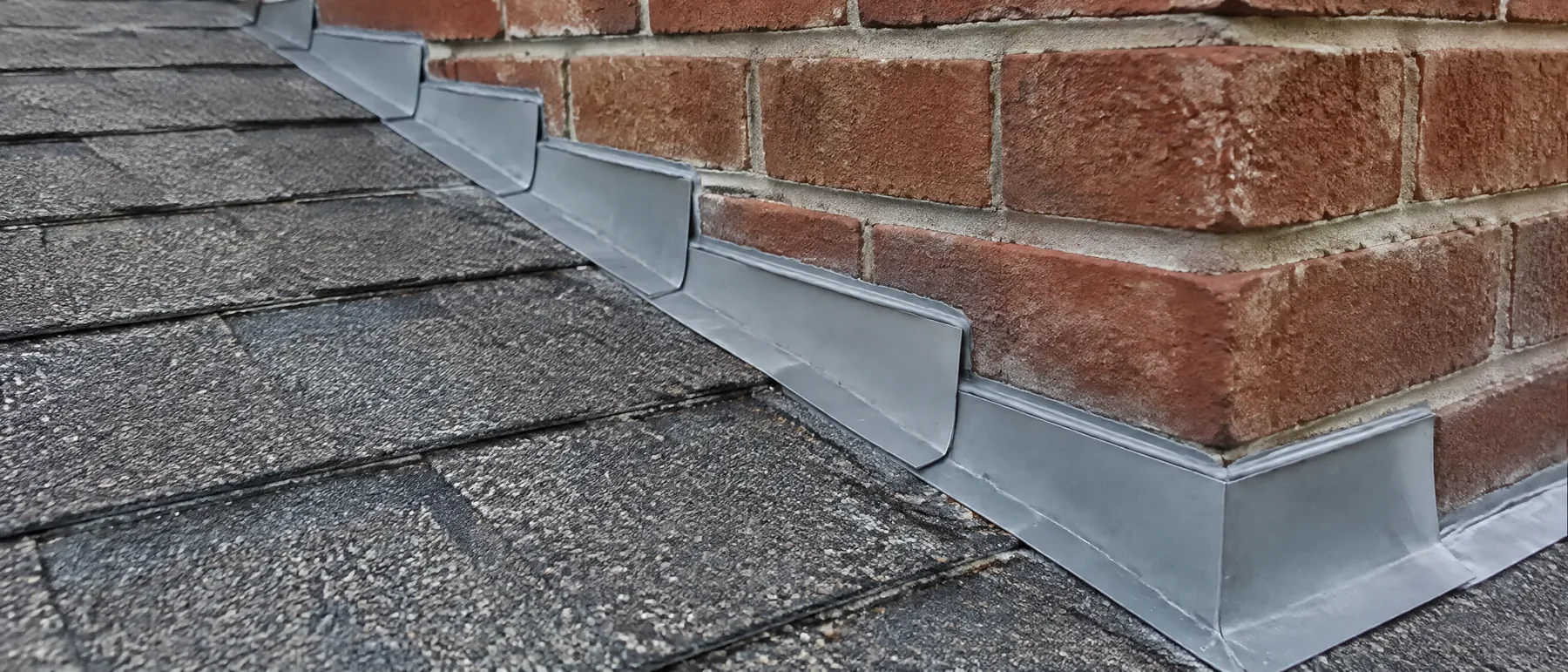
Chimney flashing repair options
The choice depends on the condition of the metal and the type of roof.
Reseal
The old sealant is removed and the joint between the counter flashing and the brick is resealed.
Reset
New counter flashing is cut into the mortar joint, fixed and sealed over the existing base flashing.
Replace
All flashing is removed and replaced, and tied into the shingles or the flat roof membrane.
Request a chimney flashing repair estimate
Tell us where the stain is and what kind of roof you have. We will arrange a time to look at the flashing.